
You feel trapped in a weeks-long loop of throbbing pain that traditional remedies cannot touch, living in constant fear of when your next cyclic migraine episode will strike. Our guide reveals the hidden biological rhythms behind these neurological patterns and provides the specific management tools you need to reclaim your life from these predictable yet agonizing cycles. You will master the latest pharmacological options like lithium and leverage digital tracking to predict your next remission phase with total confidence, clarity, and the support you deserve to finally find lasting relief starting right now.
Understanding the Neurological Rhythm of Cyclic Migraine
Does your brain follow a punishing, rigid timer? You might ask: What is cyclic migraine? Who is affected most? Often, women in their twenties face this burden.
The Pattern of Attacks and Remission
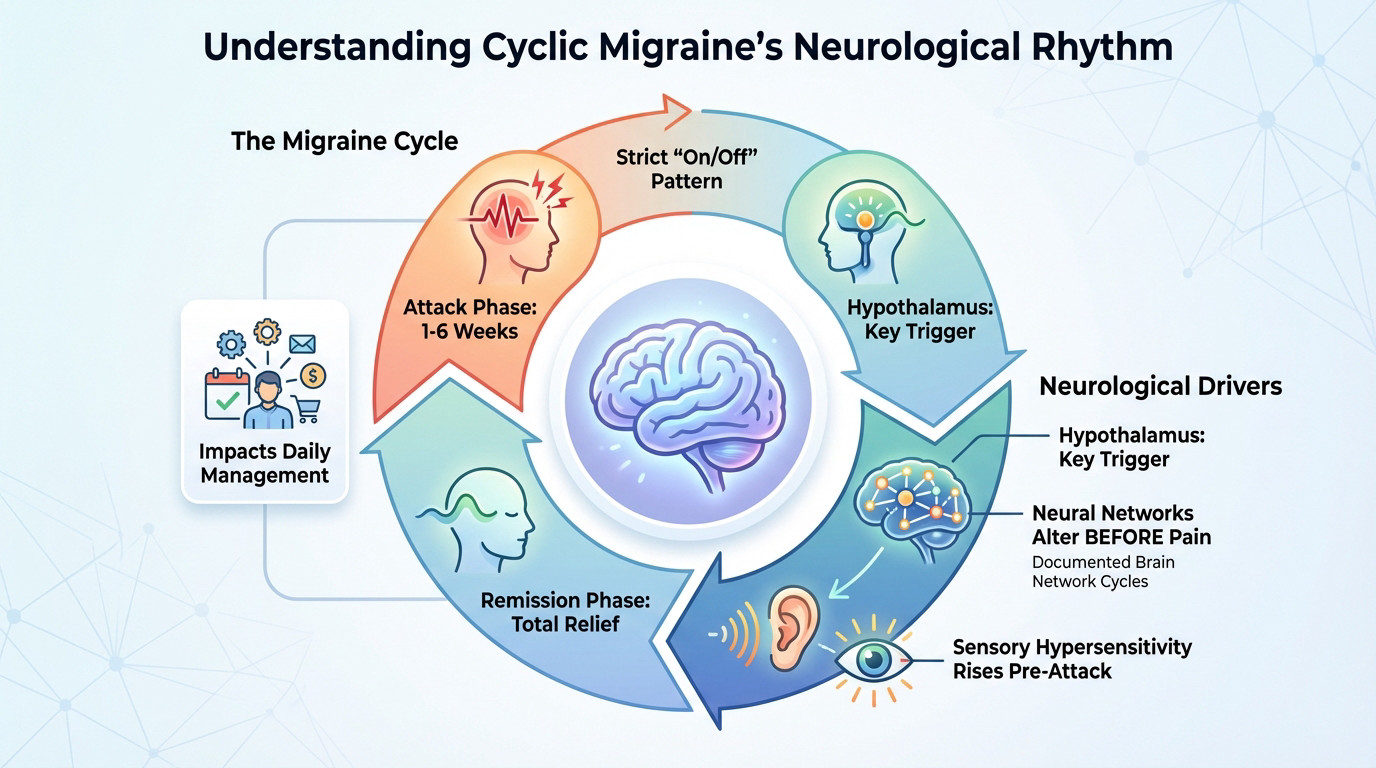
Cyclic migraine is a neurological pattern of frequent attacks lasting one to six weeks. This phase is followed by a period of total, blissful remission.
Living through “on” and “off” cycles is exhausting. This isn’t simple chronic pain. It is a strict, predictable alternation—a cycle between intense crisis and absolute silence.
Recognizing this rhythm changes how you manage daily life. Every step counts.
The Hypothalamus and Brain Network Changes
The hypothalamus acts as a biological metronome, triggering network changes early. These shifts happen before pain appears. It’s a silent neurological storm building up inside.
Research highlights these cyclic alterations of neural networks. This confirms our internal timing is the main culprit.
Sensory hypersensitivity spikes right before the attack hits. Your brain overreacts.
Who Is Most at Risk? Demographics and Symptoms
After exploring the internal brain mechanics, let’s see who actually carries this burden daily.
Prevalence in Women and Early Onset
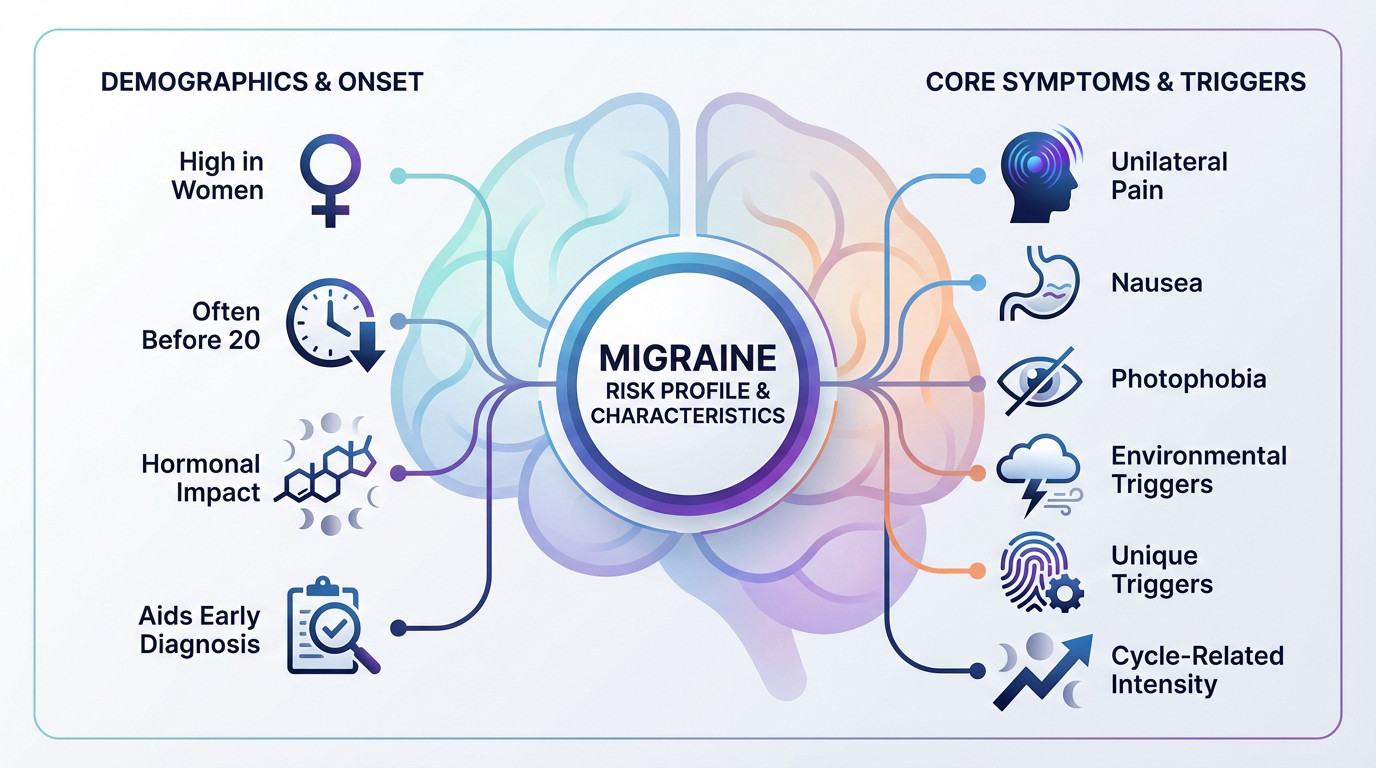
Women bear the heaviest load here. So, who is affected most? Research confirms they are over three times more likely to suffer, often starting before age 20.
Hormonal crashes often spark these episodes. Estrogen drops create a perfect storm. Understand the link between hormones and cycles of pain to regain control of your well-being.
This demographic pattern simplifies early detection. It guides you toward support. You aren’t alone.
Identifying Core Symptoms and Triggers
What is cyclic migraine? It is a pattern of one-sided throbbing, nausea, and light sensitivity. These symptoms intensify during active cycles. It feels like a physical siege.
External factors matter too. Spot unexpected migraine triggers like weather shifts or specific foods in your daily routine.
Everyone has “usual suspects.” Use Migraine Companion to track them and find freedom.
The Diagnostic Maze: Cyclic vs. Cluster Headaches
Identifying symptoms is one thing, but getting the right name for your suffering is another, far more complex challenge.
Distinguishing Patterns to Avoid Misdiagnosis
Knowing what is cyclic migraine and who is affected most helps avoid confusion with cluster headaches. Both share rhythms, but treatments differ radically. One lasts hours, while the other brings brief strikes.
You need to spot these differences early. Check out our guide on understanding other headache types to help separate these confusing patterns and find the right relief strategy.
A wrong label means years of wasted time. Don’t let misdiagnosis steal your life.
The Clinical Process and Medical History
Your medical history tells the real story. Doctors often order an MRI or CT scan first. They aren’t looking for the migraine itself, but ruling out scary things like tumors or bleeds before confirming your cycle.
Blood tests often follow. These aren’t for diagnosing migraine, but for catching inflammation or thyroid issues that mimic the pain.
Be crystal clear with your neurologist. Tell them exactly how long your pain-free breaks last.
Effective Management and Treatment Options
Once the diagnosis is set, the battle moves to the field of concrete solutions, whether chemical or behavioral. You might still wonder: What is cyclic migraine? Who is affected most? It is a rhythmic burden, but relief exists.
Pharmacological Interventions and Lithium
I’ve learned that lithium carbonate acts as a potent preventive measure. It stabilizes your nervous system during active cycles. You must monitor side effects closely with a specialist.
Prescription NSAIDs like indomethacin offer acute relief. These molecules help shatter the spiral of intense pain. They target inflammation effectively during attacks. Rapid action is their strength.
Never adjust your dosage alone. Always consult your medical specialist first.
Psychological Support and Lifestyle Adjustments
Cognitive-behavioral therapy and biofeedback offer real prospects. These methods stabilize neural networks during calm phases. You learn to control bodily responses to stress. It builds resilience against future attacks. This mental training empowers you.
Early interventions during pain-free intervals are key for long-term success. Check this study on timing.
Sleep and hydration remain your best basic allies. Tracking trends in Migraine Companion helps maintain consistency.
The Power of Tracking for Long-Term Relief
To regain control, you must turn your subjective experience into actionable data. Understanding what is cyclic migraine? Who is affected most? is the first step toward reclaiming your life.
Identifying Patterns with Digital Tools
Consistent tracking reveals hidden trends. You need data to see the full picture. Read about the efficacy of tracking apps here.
Use Migraine Companion to log your specific cycles. It helps you predict when a remission period might end. This tool turns guesswork into real knowledge.
Seeing attacks on a calendar stops the fear. You finally understand the timing.
Addressing the Psychological Impact
Pain cycles often lead straight to depression. Constant low-grade pain is exhausting for the mind. It wears your spirit down over time. You aren’t just imagining this fatigue.
This stress-migraine link explains why tension makes cycles worse. Stress acts like fuel for the fire.
Healing your mind is just as vital as treating your body. Take care of both.
Mastering your cyclic migraine patterns is the key to reclaiming your life. Track your active phases now and discuss targeted options like lithium with a specialist to break the cycle. Start today to transform unpredictable pain into a predictable, symptom-free future.
FAQ
What exactly is a cyclic migraine?
A cyclic migraine is a neurological pattern where attacks occur in distinct “on” and “off” phases. You experience frequent crises for one to six weeks, followed by a period of total remission. During the active cycle, you may face about ten attacks per month, each lasting several hours.
This condition creates a frustrating rhythm of pain and peace. It is not a simple chronic headache. It is a strict alternating cycle that demands a specific management approach to regain control of your daily life.
Who is most at risk for developing these cycles?
Women are significantly more affected by cyclic migraines than men. Symptoms typically emerge early, often starting around age 20. If your close family members suffer from migraines, your risk increases due to strong genetic factors.
The most intense period usually falls between the ages of 15 and 55. While the severity often decreases with age, early diagnosis is essential. Recognizing these patterns early helps you find the right relief faster.
How do cyclic migraines differ from cluster headaches?
The main difference lies in duration and associated symptoms. While cluster headaches are shorter and more frequent, a cyclic migraine attack lasts about six hours on average. You also experience nausea and sensitivity to light or sound, which are less common in cluster headaches.
Misdiagnosis is common because both follow a rhythmic pattern. However, the treatments differ radically. Identifying the correct type of pain ensures you receive the right medication and avoid years of medical uncertainty.
What causes the brain to enter a migraine cycle?
Your hypothalamus acts as a neurological metronome. When it loses control over your brain networks, a cycle begins. Changes in serotonin levels and hormonal fluctuations, especially drops in estrogen, further trigger these intense episodes.
External factors like stress, sleep changes, and specific foods can spark the “on” phase. Understanding how your brain reacts to these triggers is your first step toward breaking the cycle and finding lasting relief.
What are the most effective treatments for relief?
Lithium carbonate is often the most powerful preventive tool for this specific condition. It stabilizes your central nervous system to stop the cycle before it starts. For immediate pain relief during an active attack, doctors frequently prescribe Indomethacin.
Our approach combines medical care with lifestyle adjustments. Resting in a dark room and tracking your symptoms in a migraine diary are vital. These tools help your specialist tailor a plan that works specifically for your unique rhythm.