
You meticulously avoid the usual suspects like bright lights and loud noises, yet migraines still strike without warning, leaving you feeling frustrated and powerless. This isn’t just bad luck; it’s often due to a series of unexpected migraine triggers that quietly accumulate until your brain’s tolerance threshold is finally crossed. We’re not talking about the obvious culprits, but the subtle ones that hide in plain sight. Get ready to uncover these surprising factors, from the “let-down” effect after a stressful week to the paradox of oversleeping, and finally start connecting the dots behind your seemingly random attacks.
- The “Let-Down” Effect: When Relaxation Triggers an Attack
- Oversleeping: The Weekend Migraine Trap
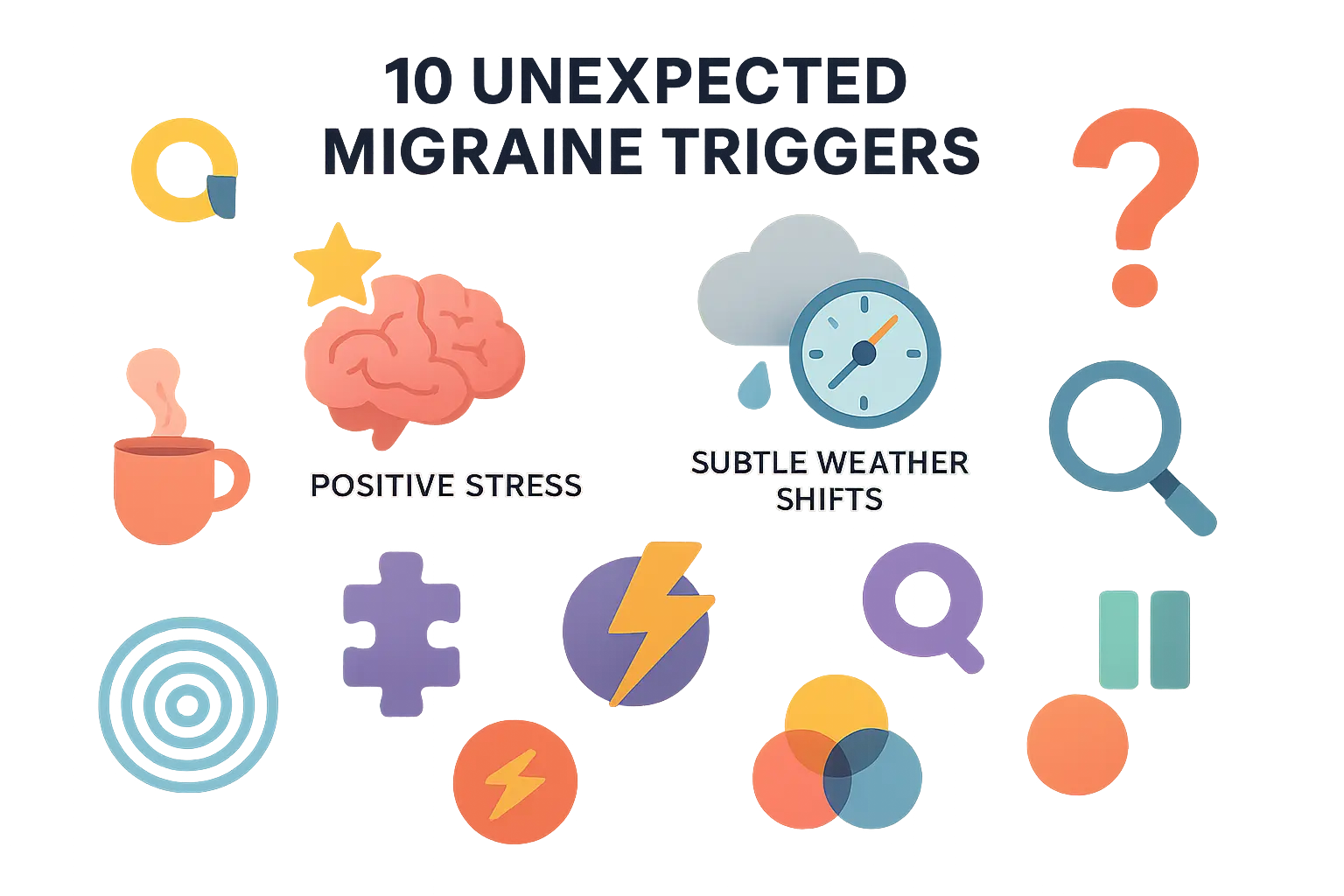
- Subtle Weather Changes: It’s Not Just the Storm
- Dehydration: The Trigger You Don’t Feel Coming
- Positive Stress (Eustress): Can Be a Problem Too
- Certain Smells: Osmophobia is Real
- Skipping Meals: A Dip in Blood Sugar
- Medication Overuse: The Rebound Headache
- Intense Exercise: When a Good Thing is Too Much
- Food Cravings: A Symptom, Not a Cause
- Beyond the usual suspects: why migraine triggers are so personal
- 10 surprising migraine triggers to watch out for
- How to identify your own unexpected triggers
- Managing your triggers is about balance, not avoidance
- References
You know the usual suspects. Bright lights, loud noises, that looming work deadline. We’ve all been told about these common migraine triggers. But what if the real culprits are hiding in plain sight, disguised as harmless daily habits or even moments of joy? It’s frustrating. You think you’re doing everything right, and yet, the attack still comes.
The truth is, the migraine brain is incredibly sensitive to change. Any change. And many triggers aren’t the direct cause you think they are; sometimes, they’re just early warning signs your body is already sending. Let’s uncover some of the less obvious factors that could be behind your episodes. You might be surprised by what you find.
The “Let-Down” Effect: When Relaxation Triggers an Attack
This one feels like a cruel joke. You push through a stressful week, finally collapse on the sofa Friday night, and then it hits. A full-blown migraine. This isn’t a coincidence; it’s the “let-down” effect. Your body gets used to running on high alert, flooded with the stress hormone cortisol. When that stress suddenly drops, the hormonal shift can be enough to trigger an attack.
In fact, one study found the risk of a migraine attack was nearly five times higher in the six hours after stress levels declined. It’s not the stress itself, but the rapid change from high stress to relaxation that your brain struggles with. The key isn’t to avoid relaxing — that’s impossible — but to manage stress more consistently throughout the week.
Oversleeping: The Weekend Migraine Trap
Everyone loves a good lie-in on a Saturday morning. Right? Well, for a migraineur, it can be a recipe for disaster. Just as too little sleep is a known trigger, so is too much. Your brain thrives on routine, and that includes a consistent sleep-wake cycle. Sleeping in disrupts your internal body clock, also known as your circadian rhythm.
This disruption can mess with neurotransmitters like serotonin, which play a role in both sleep and pain regulation. So, that extra hour or two of sleep might be doing more harm than good. Sticking to a regular sleep schedule, even on weekends, can make a huge difference.
Subtle Weather Changes: It’s Not Just the Storm
Many people with migraines can “feel” a storm coming. But it’s not just the dramatic thunder and lightning. Even subtle shifts in barometric pressure, humidity, or temperature can be enough to set off a migraine. Your brain’s hypersensitivity makes it a finely tuned barometer.
When the atmospheric pressure drops, it creates a pressure difference between the outside air and the air in your sinuses, which can be a trigger. You can’t control the weather, of course. But being aware of this trigger can help you prepare and be extra vigilant with your other management strategies on high-risk days.
Dehydration: The Trigger You Don’t Feel Coming
This is a simple one, but so often overlooked. Even mild dehydration can trigger a migraine. By the time you feel thirsty, your body is already in a state of dehydration. The brain is sensitive to the balance of fluids and electrolytes, and when that balance is off, it can lead to irritation and pain.
Don’t wait for thirst to strike. Make a habit of sipping water consistently throughout the day. It’s one of the easiest and most effective preventative measures you can take.
Positive Stress (Eustress): Can Be a Problem Too
We always talk about negative stress — work pressure, financial worries, relationship conflicts. But what about positive stress? Things like planning a wedding, starting a new job you’re excited about, or even going on vacation. These events, while happy, still cause a significant physiological stress response in the body.
Your body doesn’t always distinguish between “good” and “bad” stress. The hormonal fluctuations and heightened state of arousal are similar. This explains why migraines can sometimes strike during the happiest moments of our lives. It’s all about the change and the intensity of the emotion.
Certain Smells: Osmophobia is Real
Sensitivity to smells, or osmophobia, is a very real and often surprising trigger for many migraineurs. It’s not just about unpleasant odors. A strong perfume, the smell of certain foods cooking, or even chemical cleaning products can be enough to kickstart an attack. These strong scents can activate nerve receptors in the brain, leading to a migraine.
If you notice a pattern, it’s worth trying to identify and avoid your specific scent triggers. This might mean asking colleagues to tone down their perfume or opting for fragrance-free products at home.
Skipping Meals: A Dip in Blood Sugar
Life gets busy. Sometimes you forget to eat lunch or grab a quick, sugary snack to keep you going. For a person with migraine, this is a risky move. A drop in blood sugar (hypoglycemia) is a powerful trigger. Your brain needs a steady supply of energy to function properly.
When your glucose levels dip, it can set off a cascade of hormonal changes that lead to a headache. The solution is simple in theory, but requires discipline: eat regular, balanced meals and snacks to keep your blood sugar stable throughout the day.
Medication Overuse: The Rebound Headache
Here’s a paradox that traps many. You take medication to stop a migraine. It works. So, the next time you feel one coming, you take it again. But if you’re taking acute pain-relief medication more than 10-15 days a month, you could be setting yourself up for “medication overuse headaches,” also known as rebound headaches.
Your body gets used to the medication, and you start getting headaches from the withdrawal. It’s a vicious cycle that can turn episodic migraine into a chronic condition. It’s crucial to track your medication use and talk to your doctor about a preventative strategy if you’re relying too heavily on acute treatments.
Intense Exercise: When a Good Thing is Too Much
Regular, moderate exercise is one of the best things you can do for migraine prevention. It reduces stress and improves sleep. However, a sudden, high-intensity workout that your body isn’t used to can actually trigger an attack. This is often called an “exertional headache.”
The sudden demand on your body can cause changes in blood pressure and chemical balances that your sensitive brain interprets as a threat. The key is to build up intensity gradually. Warm up properly, stay hydrated, and listen to your body. Don’t go from zero to one hundred.
Food Cravings: A Symptom, Not a Cause
For years, chocolate has been blamed for causing migraines. But what if the craving for chocolate isn’t the trigger, but an early symptom? The first phase of a migraine, the prodrome, can start hours or even a day before the pain hits. Symptoms can include yawning, mood changes, and, you guessed it, specific food cravings.
So, you crave chocolate, you eat it, and then the migraine hits. It’s easy to blame the chocolate. But it’s more likely that the migraine was already on its way, and the craving was just one of the first signs. Keeping a detailed diary can help you distinguish between your true triggers and these pre-attack symptoms.
Understanding these less-obvious triggers is a huge step toward gaining more control. It’s not about living in fear or avoiding everything. It’s about knowledge. By identifying what truly affects you, you can make smarter choices and, hopefully, find more pain-free days.
Beyond the usual suspects: why migraine triggers are so personal
You think you know your triggers. But do you really?
Of course, bright lights and stress are well-known culprits. Many people, however, are caught off guard by attacks that seem to appear out of nowhere. This can be incredibly frustrating when you feel like you’re doing everything right.
Here’s a crucial concept: a migraine attack is rarely caused by a single factor. Instead, think of it as an accumulation of triggers. This is the threshold theory. Your brain, being hypersensitive, has a certain tolerance level. Once that threshold is crossed by a combination of smaller factors—a poor night’s sleep, a change in weather, a skipped meal—the attack begins.
This is why understanding the difference between a trigger and a prodrome symptom is so important. That sudden craving for chocolate? It might not be the cause of your migraine, but rather the very first sign that the neurological process is already underway. It’s a symptom, not the spark.
This article will explore 10 of these more subtle and often surprising triggers. The goal is to help you become a better detective of your own migraines, moving beyond just the most common migraine triggers. Let’s uncover what might really be at play so you can gain more control.
10 surprising migraine triggers to watch out for
You think you know your migraine triggers. Bright lights, loud noises, a looming deadline. But what if the real culprits are hiding in plain sight, disguised as moments of relaxation or even healthy habits? The migraine brain is sensitive to change, not just obvious stress.
Let’s uncover some less obvious factors behind your attacks. Identifying these could be the key you’ve been missing.
1. The “let-down” effect: when relaxation triggers a migraine
You survive a frantic week and finally relax on Saturday morning. Then, the throbbing starts. This is the “let-down migraine“. It’s not stress itself, but the sudden drop in stress hormones like cortisol that sends your system into a tailspin.
Your brain, used to high alert, reacts poorly to the sudden calm. Research shows the risk of a migraine can be nearly five times higher after a significant drop in stress.
The fix: Ease out of your week. Maintain a consistent sleep and meal schedule, even on weekends, to avoid shocking your system.
2. Oversleeping: the paradox of too much rest
A short night can bring on a migraine, but so can sleeping in. Too much sleep can be just as problematic. That weekend lie-in might be setting you up for a day of pain by disrupting your internal biological clock.
The migraine brain craves consistency. Deviating from your usual sleep-wake cycle is enough to provoke an attack. Regularity is your best defence.
The fix: Aim to wake up and go to bed around the same time every day. Yes, even on weekends.
3. Positive stress and excitement
A wedding, a promotion, or an upcoming vacation. These happy events can be triggers. For a migraine brain, any major deviation from its baseline state of equilibrium—or homeostasis—can cause an attack.
Your brain doesn’t like surprises, good or bad. The intense emotion, even from positive excitement, can kickstart the migraine process.
The fix: During exciting periods, use your relaxation toolkit. Take a few minutes for deep breathing or meditation to regulate your body’s response.
4. Barometric pressure changes: the invisible weather trigger
Many people blame their headaches on the rain or heat. But often, the real culprit is the invisible change in barometric pressure that happens before the weather turns. This force can affect the pressure within your sinuses and skull.
Research, including from institutions like Harvard, backs the link between weather patterns like weather changes like humidity and heat and headache incidence.
The fix: Use a weather app that tracks barometric pressure to anticipate high-risk days and be ready with your treatment.
5. Intense exercise: when fitness backfires
Regular, moderate exercise is great for migraine management. But pushing yourself too hard, too fast can have the opposite effect. A sudden, overly intense workout can be a powerful trigger due to dehydration, a drop in blood sugar, or a rapid spike in blood pressure.
The fix: Always warm up gradually. Hydrate well—before, during, and after your workout. Never exercise on an empty stomach. A small snack beforehand helps.
6. Caffeine withdrawal: the double-edged sword
Caffeine is tricky. It can stop an attack, but if your body is used to a daily dose, skipping it can lead to a brutal caffeine withdrawal headache. This is a classic cause of the “weekend migraine” for daily coffee drinkers.
A study in Frontiers in Neurology highlighted how severe attacks from acute caffeine withdrawal can be.
The fix: Keep your caffeine intake stable and moderate. If you want to quit, do it very slowly over several weeks.
7. Subtle dehydration
You know you should drink water, but even mild dehydration… can trigger a migraine. Your brain is incredibly sensitive to your body’s fluid balance. Even a slight lack of water can cause brain tissue to shrink, putting pressure on nerves.
The fix: Don’t wait for thirst to strike. Sip water consistently throughout the day. Keeping a water bottle handy is a powerful habit.
8. Specific smells (not just strong ones)
Aversion to smells (osmophobia) is a common migraine symptom, but certain smells can also be the trigger. We’re not just talking about overpowering perfume. Sometimes, the culprits are surprisingly mundane, like gasoline, fresh paint, or even a specific food cooking.
The fix: Keep a diary to pinpoint your specific scent triggers. Once identified, avoid them. A scarf with a drop of peppermint oil can help mask an offending odor.
9. Artificial sweeteners: the hidden sugar trap
Reaching for a “diet” or “sugar-free” product might feel like a healthy choice, but you could be walking into a migraine trap. Aspartame and other artificial sweeteners are well-documented triggers for some sufferers. The problem is they are hidden in many processed foods.
The fix: Become a label detective. Read ingredients carefully. Products where aspartame often hides include:
- Diet sodas
- Light yogurts
- Sugar-free chewing gum
- Some medications or vitamins
10. Medication overuse: the rebound headache
This is the most insidious trigger. The very medication you take for pain can, if used too often, start causing more headaches. It’s a vicious cycle known as a rebound headache or Medication Overuse Headache (MOH).
Your body gets used to the pain reliever, and when it wears off, it triggers a withdrawal headache. You take another pill, and the cycle continues.
The fix: Follow dosage instructions. Avoid taking acute pain-relief medication more than two or three days a week. If you suspect a rebound cycle, speak with your doctor.
How to identify your own unexpected triggers
Knowing the list of potential triggers is one thing. Pinpointing your own is a completely different challenge. It’s personal. And it requires a bit of detective work.
Fortunately, you have an incredibly powerful tool at your disposal: the migraine diary. This isn’t just about noting when a migraine hits. It’s about becoming a scientist of your own body.
To do it right, you need to track more than just the attack itself. Log the date and intensity, of course. But also think about the 48 hours leading up to it. What did you eat? How did you sleep? What was your day like? The weather? Your stress levels? Any unusual event, no matter how small, could be a clue.
The goal is to connect the dots between your daily life and your migraine episodes. For example, tracking your food triggers can reveal surprising links you’d never have guessed otherwise.
| Date & Time of Attack | What I Did/Ate (24h before) | Weather/Environment | Stress Level (1-10) | Potential Trigger Identified |
|---|---|---|---|---|
| Nov 19, 2 PM | Slept in until 10 AM, skipped breakfast, intense gym session | Rainy, strong perfume smell in the office | 3 (relaxed weekend) | Oversleeping + Intense exercise |
Look at this example. A relaxed weekend suddenly ruined by a migraine. Without a diary, you might blame the rain or the perfume. But looking closer, the combination of oversleeping and intense exercise on an empty stomach stands out. That’s a pattern.
Let’s be clear. The objective isn’t to wrap yourself in bubble wrap and avoid life. It’s about spotting these recurring patterns so you can make small, informed adjustments. Maybe it’s not about giving up the gym, but about making sure you eat beforehand.
Don’t get discouraged. This process takes time. Identifying your triggers is a marathon, not a sprint. Be patient, be consistent, and you’ll slowly but surely gain a better understanding of your migraines.
Managing your triggers is about balance, not avoidance
The goal is not to live in a bubble. Far from it. The real power comes from understanding your body’s unique responses and finding a sustainable balance.
Think back to the migraine threshold theory. It’s not about dodging every single potential trigger—an impossible and exhausting task. Instead, it’s about managing the factors you can actually control.
By focusing on a few key areas, like consistent sleep and proper hydration, you effectively raise your tolerance. This makes you more resilient to the triggers you can’t control, such as a sudden weather change or hormonal shifts.
This knowledge gives you power and control. It allows you to make informed choices. Maybe you decide to have that glass of wine, but you make sure you’re well-rested and hydrated first. You’re no longer a passive victim of your migraines; you’re an active participant in your own well-being.
Your trigger journal is an invaluable tool in this process. Don’t keep these findings to yourself. Discuss them with your doctor or neurologist. This concrete data helps them see the full picture, adjust your treatment plan, and better understand how migraine impacts daily life.
Every piece of information you gather, no matter how small, is a step forward. It’s a move toward fewer attacks, less anxiety, and a better quality of life. You’re learning to work with your brain, not against it.
References
For those who wish to explore the topics discussed in this article further, here are the scientific and reliable sources that informed its content. Transparency and solid evidence are key to understanding and managing migraines effectively.
- American Migraine Foundation. (n.d.). Top 10 Migraine Triggers and How to Deal with Them.
- Migraine Disorders. (n.d.). Migraine Triggers.
- Hranilovich, J. A., & Rizzoli, P. (2020). The relationship between caffeine and migraine: A narrative review. Frontiers in Neurology.
- Harvard Health Publishing. (2020). Headache: When to worry, what to do.
## Managing Your Triggers Is About Balance, Not Avoidance
The goal isn’t to live in a bubble. By managing controllable triggers like sleep and hydration, you increase tolerance for uncontrollable ones like weather. This knowledge gives you power to make informed choices. Discuss your findings with a doctor; every insight is a step toward a better quality of life.