
You wake up expecting rest, yet a crushing, rhythmic weight greets you before you even move. These recurring morning migraines are not random accidents but are deeply rooted in your internal biological clock and the specific transitions between your deep and REM sleep stages every single night. Our guide shows you how to stabilize your brain chemistry, manage hidden triggers like nocturnal dehydration, and implement a bulletproof routine to finally reclaim your mornings and stop the constant, debilitating agony from stealing your daily productivity and your own peace of mind.
Why Do You Wake Up With a Migraine?
After a night meant to be restorative, waking up with a throbbing pain feels unfair, but science explains why your brain didn’t really rest.
The Biological Clock and Pain Sensitivity
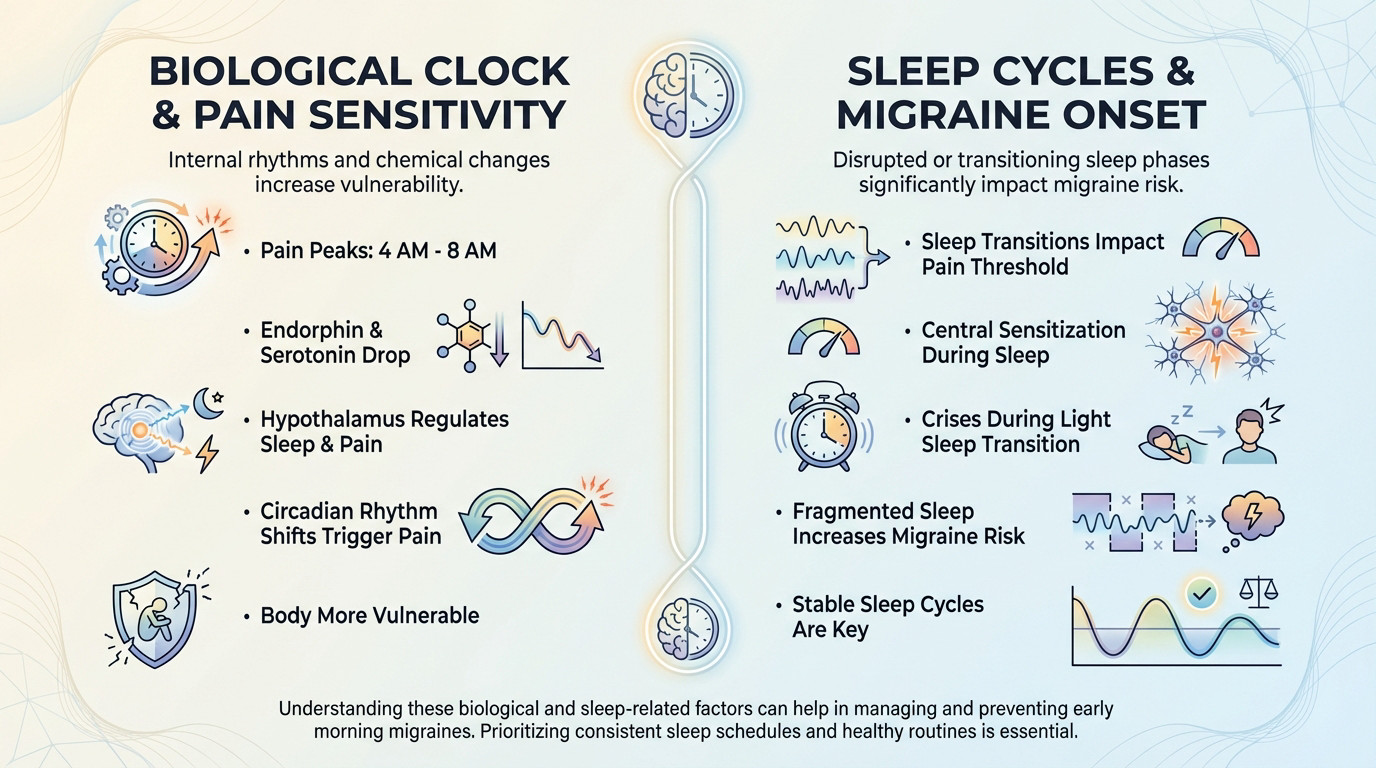
I’ve faced these dawn attacks and know the frustration. Between 4 AM and 8 AM, natural painkillers like endorphins and serotonin hit rock bottom. This creates a massive vulnerability window. Your defenses are down. It’s a physiological trap.
The hypothalamus is the culprit here. It acts as the control center for both sleep and pain. When this switch glitches, it triggers a migraine instead of a wake-up call.
Your circadian rhythm dictates everything. Even a tiny shift in this internal clock sends pain signals straight to your brain.
It isn’t your fault. Your internal clock is simply misfiring at the worst possible time.
Sleep Cycles and Migraine Onset
Shifting between REM and deep sleep affects your pain threshold. These transitions explain why morning migraines happen (sleep cycle connection). See this guide on night morning migraines causes.
Central sensitization builds up while you dream. Your brain processes pain signals silently throughout the night. By dawn, the “volume” of pain is already turned up to the max.
Attacks often strike during the move to light sleep. Your brain “wakes up” already trapped in a full-blown crisis.
Cycle stability is everything. Fragmented rest creates attacks. Migraine Companion helps you track these patterns.
Common Morning Triggers Beyond Sleep
If biology explains the “when”, the environment and our nocturnal habits often explain the “why” of this morning agony.
Dehydration and Blood Sugar Drops
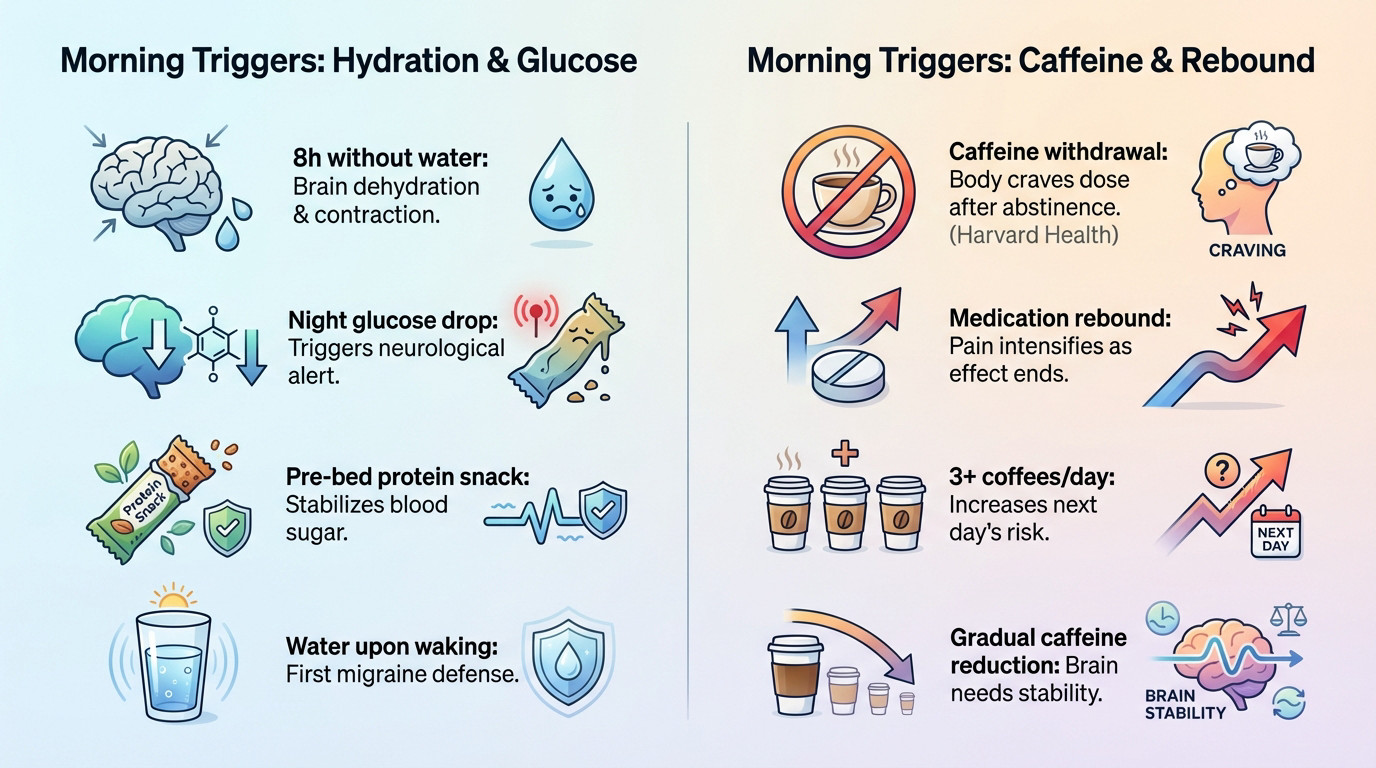
Eight hours without a single drop of water parches your brain tissues. This leads to a painful, physical contraction inside your skull. It is a classic reason why morning migraines happen (sleep cycle connection). Most patients completely ignore this simple biological dehydration.
Your brain consumes massive amounts of glucose even during the night. A sharp morning sugar drop triggers a loud neurological alarm. This often results in a waking migraine nightmare today.
Try eating a light protein snack before bed. This keeps your blood sugar stable until the early morning hours.
Drink a large glass of water immediately. It is your first defense against morning pain.
Caffeine Withdrawal and Rebound Effects
Your body screams for its dose after long hours of abstinence. This is classic nocturnal caffeine withdrawal. Check this Harvard Health on caffeine withdrawal. It explains the vascular changes that trigger your morning pain.
Medication taken the night before might actually be the culprit. As the treatment wears off, the pain returns. This rebound effect is frequently more intense than the original morning headache.
Drinking three coffees daily increases tomorrow’s risks. It is a vicious cycle that is very hard to break alone.
Reduce your caffeine intake very slowly. Your brain needs stability, not sharp chemical spikes.
References
- Harvard Health: https://www.health.harvard.edu/blog/if-you-have-migraines-put-down-your-coffee-and-read-this-2019093017897
- Migraine Québec: https://www.migrainequebec.org/fr/les-types-de-migraine
- La Voix des Migraineux: https://www.lavoixdesmigraineux.fr/
The Impact of Sleep Disorders on Migraine
Sometimes, the problem isn’t the lack of sleep, but its poor quality because of underlying pathologies. This reveals why morning migraines happen (sleep cycle connection) even after a full night.
Sleep Apnea and Oxygen Deprivation
Sleep apnea literally starves your brain of oxygen while you sleep. Your vessels dilate rapidly to fix this. That creates a crushing pressure that feels impossible to endure.
You need to distinguish between a true migraine and hypoxia-related tension. Check out this guide on Other headaches vs. migraines and tension. It helps clarify your specific and chronic pain.
Do you snore loudly? Your morning migraine might be a hidden and dangerous respiratory symptom.
Treating apnea often slashes how often you suffer. It is a very serious medical lead.
Bruxism: Teeth Grinding as a Trigger
Your jaw and the trigeminal nerve are tightly linked. Clenching your teeth all night sends pain signals straight to your temples. You wake up with a massive migraine immediately. It is a brutal way to start your day.
Look for signs like a tired jaw or sensitive teeth. Stress usually drives this nocturnal grinding habit. Tracking these patterns with Migraine Companion helps identify the true cause.
Wearing an occlusal splint can change everything. It is a simple tool to shield your tired muscles and sensitive nerves.
Try massaging your face before bed. Relaxing your jaw means sparing your brain from agony.
Environmental and Lifestyle Factors
Beyond your body, where you rest your head determines how you’ll feel at sunrise.
Bedroom Ergonomics and Air Quality
Your pillow choice dictates your morning. A bad angle kinks the neck and halts blood flow. This tension tightens cervical muscles quickly. These knots send pain signals straight to your skull before you even wake up.
Stale air hides invisible triggers. Mold spores or heavy perfumes irritate your sensitive nervous system. A stuffy, unventilated room becomes a dangerous trap for your brain during the night.
Keep your bedroom cool, ideally around 18 degrees. Excessive heat triggers vasodilation, which often sparks that familiar throbbing pain.
Ditch the screens before bed. Blue light kills melatonin, your body’s best natural defense.
The Role of Weather and Barometric Pressure
Atmospheric shifts squeeze your sinuses and blood vessels. A sudden overnight pressure drop often causes a morning attack. Check out this guide on Barometric pressure migraines: science behind the trigger. Your brain reacts to these invisible changes.
Humidity also plays a massive role. Some brains act like living barometers, sensing a storm long before the clouds appear. This explains why morning migraines happen (sleep cycle connection) when conditions shift.
Tracking the forecast helps you anticipate these attacks. Log these patterns in Migraine Companion to finally stay ahead.
Use a dehumidifier to stay in control. Managing your environment means reclaiming your power.
How to Break the Cycle of Morning Pain
Understanding causes is one thing; taking action is another. This explains why morning migraines happen (sleep cycle connection): your brain demands predictability.
Tracking Patterns with Migraine Apps
Stop guessing about your triggers. Use tracking tools to spot real correlations. Log your bedtime, dinner, and even the weather. Check out this Migraine tracking apps effectiveness: a realistic look at results because it makes patterns finally visible and clear.
Migraine Companion helps you see those hidden trends. Often, the real trigger happened two full days before your attack. Trust the numbers because the data never lies.
Share these findings with your neurologist. It speeds up your diagnosis and helps pick the right preventive treatment path today.
Don’t stay in the dark. Measuring your pain is the first step toward actually healing.
Establishing a Bulletproof Sleep Routine
Stick to a strict schedule, even on Saturdays. Sleeping in is often a massive mistake for us. Your brain hates sudden rhythm shifts. Consistency is your best defense, so keep your wake-up time identical every day.
Try relaxation techniques like meditation or deep breathing. Calming your nervous system before bed stops nightly hypervigilance. It sets the stage for a much calmer, pain-free wake-up call tonight.
Use the ‘chaser’ strategy for late-day attacks. Taking a long-acting preventive can literally save your entire night of rest now.
Build a sleep sanctuary. Your bedroom must be for rest and total serenity only. Period.
References
To go further and validate this information, here are the scientific and medical sources.
Scientific Sources and Further Reading
I use sources like Harvard Health Publishing to explain why morning migraines happen (sleep cycle connection). Clinical studies are vital to grasp these patterns. Stick to the facts.
The American Journal of Medicine provided the hard data on caffeine. Science moves fast, so keep your eyes open.
Consult sites like Migraine Québec. Their French-language resources are top-notch and very reliable.
Morning pain isn’t random; it is your biological clock and sleep cycles colliding at dawn. Stop the cycle now by prioritizing routine and hydration to reclaim your energy. You deserve to wake up refreshed and embrace a future free from waking with a headache.
FAQ
Why do I always wake up with a migraine?
It feels like a betrayal. You sleep to rest, yet you wake up in agony. Between 4:00 AM and 8:00 AM, your body’s natural painkillers—endorphins and serotonin—hit their lowest levels. Your internal clock is shifting gears, making you hyper-sensitive to pain.
Your hypothalamus is the control center. It regulates both sleep and pain. When this “switch” malfunctions, it triggers a crisis instead of a peaceful wake-up call. It is not your fault; it is your biology.
How do sleep cycles trigger morning pain?
Your brain is active while you dream. Transitions between deep sleep and REM are critical. If these cycles are fragmented or interrupted, your pain threshold plummets. Your brain processes pain signals even while you are unconscious.
Crises often hit during the shift to light sleep. This is when your brain “wakes up” into a state of inflammation. Stability is everything. A broken sleep cycle is a fertile ground for a migraine attack.
Can dehydration or low blood sugar cause morning migraines?
Yes. Eight hours without water leaves your brain tissues parched and contracted. This nocturnal dehydration is a classic, silent trigger. Your brain also consumes massive amounts of glucose, even at rest. If your sugar levels drop overnight, your nervous system sounds the alarm.
Try a light, protein-rich snack before bed. It stabilizes your blood sugar until dawn. Drink a full glass of water the moment you open your eyes. It is your first line of defense against the morning throb.
Is my teeth grinding linked to my morning headache?
Absolutely. Bruxism puts immense pressure on your jaw and the trigeminal nerve. This tension doesn’t stay in your mouth. It radiates upward, ending in a full-blown migraine by sunrise. You wake up with a tight jaw and a pounding temple.
Stress is usually the engine behind this nightly clenching. Using a night guard can protect your nerves and muscles. Relax your jaw before sleep. Saving your teeth might just save your morning.
Does sleep apnea cause morning migraines?
It can. Sleep apnea starves your brain of oxygen. To compensate, your blood vessels dilate, creating intense intracranial pressure. This “oxygen hunger” often presents as a crushing headache the moment you wake up.
If you snore or feel exhausted after a full night, get a sleep test. Treating apnea often slashes the frequency of these attacks. Your migraine might actually be a respiratory cry for help.
How can I stop waking up with a migraine every day?
Consistency is your ally. Wake up at the same time every day—even on weekends. Your brain hates sudden changes in rhythm. Create a sanctuary: keep your room cool, dark, and free of blue light before bed.
Stop guessing and start tracking. Use an app like Migraine Companion to find patterns in your diet, weather, and sleep. Data doesn’t lie. Once you see the trend, you can break the cycle for good.