
Have you ever felt the frustration of a silent migraine where strange visual zigzags, sudden numbness, or dizzying vertigo occur without the crushing head pain of a typical attack? This confusing neurological event is a reality for about 5% of our community where intense aura symptoms take center stage while the expected headache remains mysteriously absent. By exploring the biological mechanisms of this acephalgic migraine and identifying subtle prodrome warning signs, you will discover how to manage these invisible episodes and handle the postdrome fatigue with confidence and total mental clarity.
Silent Migraine Symptoms and Visual Aura Patterns
After seeing that a migraine isn’t always about a pounding head, let’s look at what doctors call a silent migraine.
Defining the Acephalgic Migraine Phenomenon
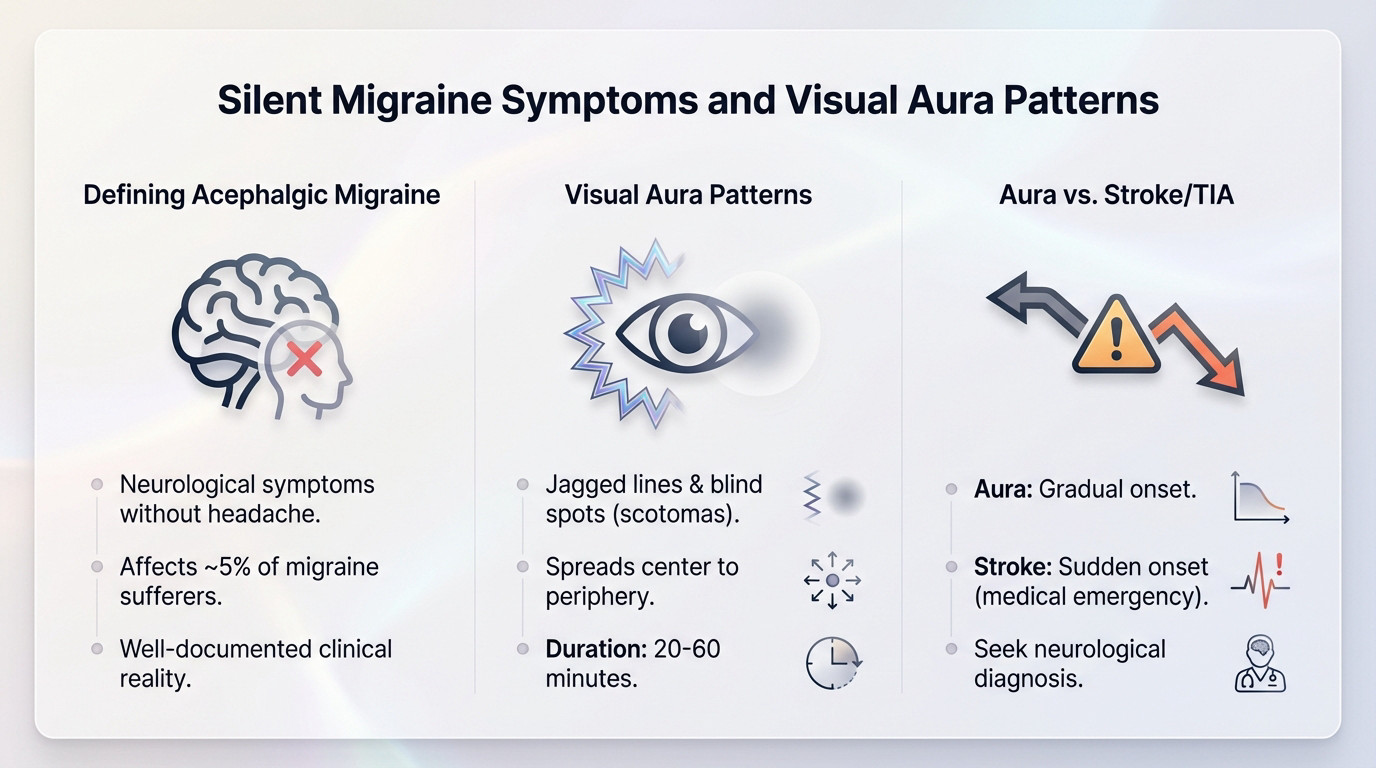
The medical world calls this an acephalgic migraine. You experience neurological shifts without the usual crushing head pain. These symptoms simply replace the headache phase entirely during your specific episode.
This affects roughly 5% of migraineurs. You can find more about acephalgic migraine through our recent community clinical data.
Patients often feel confused when pain is absent. Yet, it remains a well-documented clinical reality for thousands in our community.
Visual Disturbances From Zigzags to Scotomas
You might see jagged lines or growing blind spots. These disturbances usually drift from the center to the edges of your vision. Some people report scotomes scintillants. It feels like looking through a broken, shimmering, colorful kaleidoscope.
These geometric patterns differ from simple light flashes. Their structure is remarkably specific and very organized.
Most episodes last between twenty and sixty minutes. They fade away without leaving any permanent traces.
Distinguishing Aura From a Stroke or TIA
Watch for sudden numbness or loss of balance. A migraine aura builds up slowly over minutes. In contrast, a stroke hits you instantly and without any warning at all.
Use this guide to distinguish aura from stroke safely. Always prioritize caution when symptoms feel new.
A professional neurological diagnosis is necessary. It helps rule out serious vascular risks and gives you real peace of mind.
3 Phases of a Migraine Without Headache
While visual disturbances are quite striking, they only represent one part of the neurological journey your brain traverses.
Spotting Prodrome Signs Before the Aura
Watch for early warnings like frequent yawning or sudden irritability. These subtle shifts often signal an upcoming episode. Recognizing these quiet alerts helps you really prepare before things escalate further.
Light sensitivity often creeps in long before any visual disturbances appear. These signs can surface up to 24 hours early. Use Migraine Companion for these unexpected migraine triggers. It gives you a head start on your own effective management strategy.
Learning to spot these signals truly changes the game. You can finally anticipate and manage a silent episode with confidence.
Managing the Postdrome Migraine Hangover
Expect physical exhaustion and heavy brain fog once the aura fades. Many call this the migraine hangover. It feels like your body just ran a marathon without actually even moving.
Gentle recovery methods help you overcome this lingering fatigue. Rest and darkness remain your most reliable allies. Give yourself permission to simply switch off until you finally feel human again.
Your body feels drained because the brain consumed massive energy during that electrical wave. Even without pain, the neurological storm is taxing. Recovery takes time because your system needs recharging.
Why Does an Aura Happen Without Pain?
To understand why the brain gets so noisy without triggering a headache, we need to look under the hood of biology.
Cortical Spreading Depression and CGRP Roles
Silent migraines stem from a unique electrical wave. Scientists call this Cortical Spreading Depression. It travels quite slowly across your brain’s outer surface. Learn more about What is a Migraine to see the full picture.
The CGRP peptide also shapes how these signals move. Sometimes, this chemical process simply doesn’t wake up the pain nerves. The experience remains strictly neurological without the usual intense throbbing.
The outcome is purely visual or sensory. Your head stays clear even while your neurons are firing away quite rapidly.
Hormonal Influences and the Estrogen Connection
Estrogen fluctuations impact aura frequency more than many realize. Hormones act as a major modulator for our brain’s stability. These shifts often dictate when an episode strikes our lives.
Hormonal changes leave the brain vulnerable to outside triggers. Check out Migraines and Menstrual Cycle for details. This sensitivity makes us prone to these silent, confusing episodes.
Sudden hormone drops often trigger these events. The link between cycles and silent episodes is undeniable. We see this pattern in thousands of cases within our own community data.
Practical Management and Prevention Strategies
Fortunately, not feeling pain doesn’t mean we should just sit around while these episodes happen.
Role of Magnesium and Vitamin B2 in Prevention
Magnesium and riboflavin are real assets for stabilizing brain excitability. These nutrients keep your neurons from misfiring during an aura. Our community often finds relief with these simple daily additions.
Stick to strict hydration and regular sleep schedules. Avoiding late-night scrolling helps your brain rest. Check out how Screens Cause Migraines to understand the light connection. Consistency is your best defense against unexpected episodes. Every small habit really matters now.
Watch out for trigger foods like aged cheeses or processed meats. Keeping your diet stable often cuts down aura frequency.
Tracking Subtle Triggers With Migraine Companion
Logging non-pain symptoms is a very smart move. A digital diary reveals patterns you might otherwise miss. It turns vague feelings into clear, actionable data for your next doctor visit.
The Migraine Companion app links your environment to your symptoms. You can track weather shifts or stress levels easily. See how Barometric Pressure Migraines impact your aura. It’s about finding what actually bothers you every single day of your life.
Share these logs with your specialist. It helps refine your overall treatment strategy and gives you back some needed control.
Recognizing that neurological aura without pain is still a migraine episode allows you to finally take control. Start tracking these subtle shifts with Migraine Companion today to uncover your hidden patterns. By identifying triggers now, you can master these silent attacks and move toward a future of lasting clarity.
FAQ
Can you actually have a migraine without any head pain?
Yes, absolutely. This is medically known as an acephalgic migraine or a “silent migraine.” While most people associate migraines with throbbing pain, about 5% of our community experiences these neurological episodes where the headache phase is simply missing. I’ve learned through years of research and community feedback that even without the pain, your brain is still going through a full migraine event.
What are the most common symptoms of a silent migraine?
Since there is no headache, the focus is usually on the aura phase. You might see flickering lights, zigzag lines (often called fortification spectra), or develop blind spots that spread across your vision. Many of us also experience sensory changes like tingling in the hands or face, “brain fog,” or even difficulty finding the right words. These symptoms typically develop over several minutes and can be quite startling if you aren’t expecting them.
How can I tell the difference between a silent migraine and a stroke?
This is a vital question for your safety. The key difference is usually the speed of onset. Migraine aura symptoms typically build up slowly over 5 to 60 minutes. In contrast, stroke or TIA symptoms happen suddenly—like a light switch being flipped. If you experience sudden weakness on one side of the body, a drooping face, or an immediate loss of speech, please seek emergency medical care right away to rule out vascular issues.
Why does my brain trigger an aura but skip the headache?
It all comes down to a wave of electrical activity called Cortical Spreading Depression (CSD). This wave moves slowly across the cortex, triggering the visual and sensory disturbances we call aura. In a silent migraine, this process happens, and the peptide CGRP is released, but for reasons we are still studying, the “pain cascade” that usually activates the trigeminal nerve never fully kicks in. It’s essentially a neurological storm that stays quiet on the pain front.
How long do these “silent” episodes typically last?
The visual aura itself usually lasts between 20 and 60 minutes. However, a silent migraine is more than just the aura. You might experience a “prodrome” phase with irritability or cravings 24 hours before, and a “postdrome” (or migraine hangover) for a day afterward. During this recovery, it’s common to feel completely drained or “emptied out” because your brain used so much energy during the electrical event.
What can I do to manage or prevent silent migraines?
Prevention starts with identifying your personal “why.” Many in our community find success by stabilizing their nervous system with Magnesium and Vitamin B2 (Riboflavin) and maintaining a strict sleep schedule. Since stress and hormonal shifts are major triggers, I always recommend tracking your episodes. Using a tool like the Migraine Companion app can help you spot patterns in unexpected triggers like weather changes or specific foods, allowing you to take control before the next silent episode begins.