
Do you feel that subtle, familiar shift hours before the pain even hits—a strange fatigue, a stiff neck, or sudden mood swing—and wonder if it’s too soon to react? Many people wait too long, but understanding the right first migraine signs action is scientifically proven to be your best defense to stop an attack. This guide demystifies those early warnings, like the prodrome and aura phases, and provides a clear, step-by-step plan. We’ll show you exactly how to turn those initial signals into your most powerful tool for immediate relief, helping you regain control before the migraine takes over.
-
- Recognizing the Very First Signs: Prodrome vs. Aura
- Your Immediate Action Plan: The Moment You Notice a Sign
- Building Your Personal Migraine Toolkit
- References
- The early warning system: spotting the first signs before the pain
- Your immediate action plan: what to do the moment you notice a sign
- Prodrome vs. aura: a practical action guide
- Managing early signs at work: a quick survival kit
- The ultimate goal: prevention is better than reaction
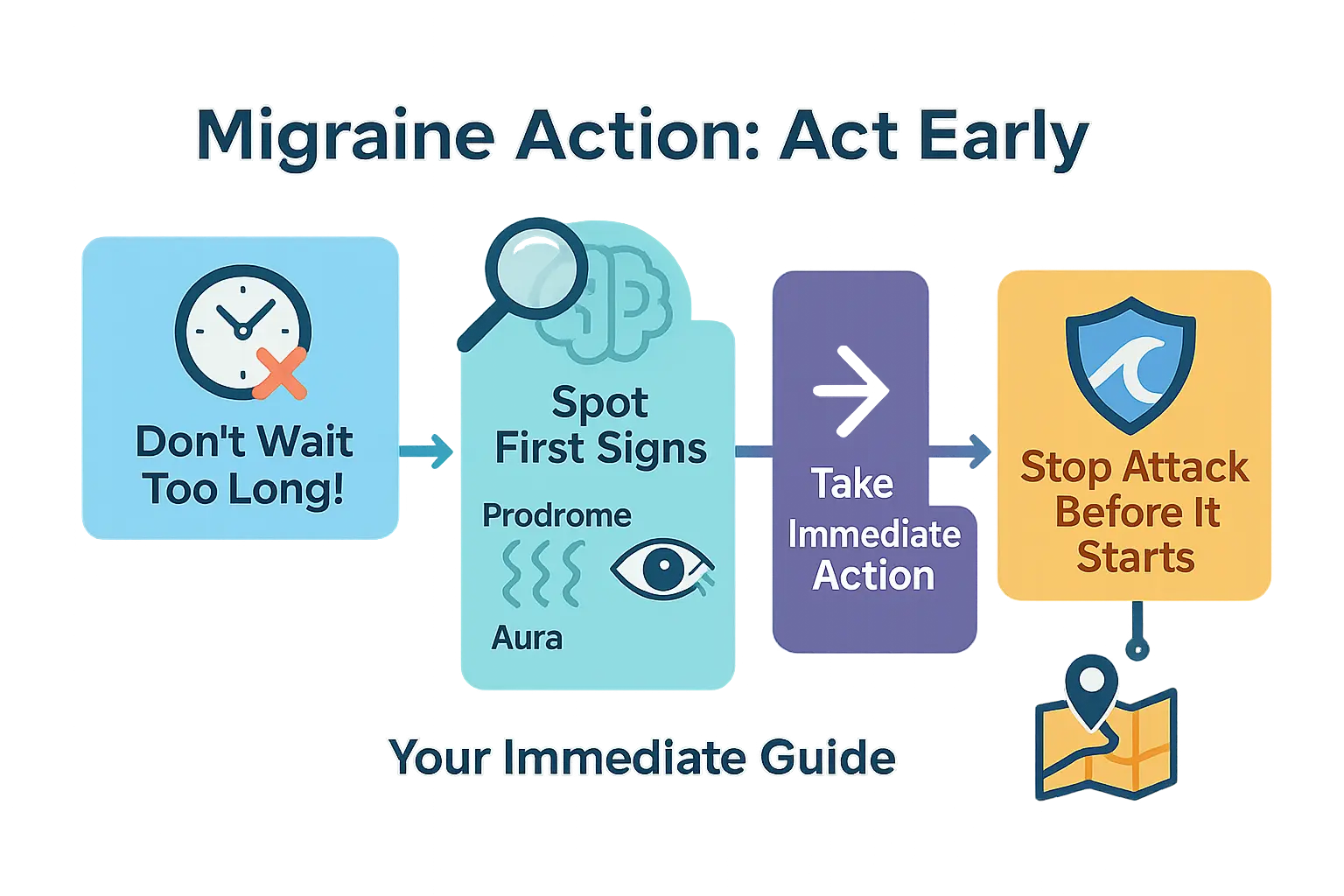
You feel it. That subtle, almost imperceptible shift. It’s not a headache yet, but you know something’s off. This is the critical moment. This is where you can change the course of the next few hours, or even days. The most common mistake? Waiting. Waiting for the pain to confirm what you already suspect. This guide is about breaking that habit. It’s your plan for first migraine signs action.
Forget the “wait and see” approach. It’s a losing game. The key is to act decisively at the very first whisper of a migraine. We’re talking about the earliest, often bizarre, warning signs that many people dismiss. Acting now can help you stop an attack before it truly begins.
So, let’s get straight to the point. No fluff, just actionable steps you can take the moment you recognize that familiar, unwelcome feeling.
Recognizing the Very First Signs: Prodrome vs. Aura
Before the headache hits, your body often sends out warning signals. These signals fall into two distinct phases: the prodrome and the aura. Understanding the difference is your first strategic advantage. Why? Because acting during the prodrome — the earliest phase — is your best shot at preventing the full-blown attack.
What is the Prodrome Phase?
Think of the prodrome as the migraine’s long, slow approach. It can start hours, sometimes even a day or two, before the head pain. The symptoms are often vague and easily mistaken for something else. A bad night’s sleep? Stress? You might be tempted to brush them off. Don’t.
Common prodrome symptoms include:
- Sudden mood swings, like feeling irritable or unusually down.
- Unexplained fatigue and excessive yawning.
- Stiffness or a dull ache in your neck.
- Specific food cravings you wouldn’t normally have.
- Increased sensitivity to light or sound.
- Difficulty concentrating or finding your words.
Some people even experience a strange burst of energy or hyperactivity. The key is that these feelings are out of the ordinary for you. They are your personal migraine signature.
How is an Aura Different?
The aura is a much more dramatic and shorter event. It typically follows the prodrome and precedes the headache, lasting anywhere from five minutes to an hour. Only about a quarter of people with migraine experience an aura. It’s characterized by sensory disturbances.
Aura symptoms are hard to miss:
- Visual changes: Seeing flashing lights, zig-zag lines, or blind spots.
- Sensory symptoms: Numbness or a tingling sensation, often in the fingers or face.
- Speech difficulties: Trouble speaking or forming coherent sentences.
The main takeaway here is the timeline. The prodrome is your earliest warning system, developing over hours. The aura is the final, short alarm bell right before the pain phase. Your goal is to act during the prodrome.
Your Immediate Action Plan: The Moment You Notice a Sign
You’ve identified a sign. Maybe you’re yawning uncontrollably or a craving for salty snacks just hit you like a ton of bricks. What now? Don’t hesitate. This is not a drill. Every minute counts. Here are the immediate, concrete steps to take.
Step 1: Take Your Acute Medication Immediately
This is the most critical step. If your doctor has prescribed an acute treatment, take it now. Not in an hour. Not when the pain starts. Now.
Most acute medications, like Triptans or the newer Gepants, are designed to work best when taken at the very onset of an attack. Studies show their effectiveness plummets if you wait for the pain to become moderate or severe. Taking them during the prodrome can significantly increase the chances of stopping the attack altogether.
Always follow the plan you’ve established with your doctor. Don’t exceed the recommended monthly dosage to avoid medication overuse headaches.
Step 2: Retreat and Control Your Environment
Your body is signaling that it’s overloaded. Listen to it. As soon as you can, find a quiet, dark space. Your sensitivity to light and sound is already increasing, even if you don’t fully realize it yet. Reducing sensory input is an active part of your treatment.
If you’re at work, see if you can use a quiet room or an empty office. If you’re at home, go to your bedroom. Turn off the lights, draw the curtains, and silence your phone. Ask your family for quiet time. it’s being strategic.
Step 3: Hydrate and Have a Small Snack
Dehydration is a massive trigger for many. Drink a large glass of water immediately. Avoid sugary drinks or excessive caffeine, which can sometimes make things worse.
Similarly, a drop in blood sugar can be a trigger. If you haven’t eaten in a while, have a small, simple snack. Avoid anything that you know is a personal food trigger. Something bland and easy to digest is best.
Step 4: Use Non-Medication Comfort Measures
These aren’t just old wives’ tales; they can make a real difference in managing symptoms and reducing the need for more medication.
- Cold or Hot Compress: Many find relief from a cold pack on their forehead, temples, or the back of their neck. The cold can have a numbing effect on the pain. Others prefer a warm compress to relax tense neck and shoulder muscles. Experiment to see what works for you.
- Caffeine (with caution): A small amount of caffeine, like a small cup of coffee, can help in the early stages. It can enhance the effect of pain relievers and has some pain-relieving properties of its own. But be careful — for some, it’s a trigger, and too much can cause a rebound headache.
By taking these decisive steps the moment you spot a warning sign, you are actively fighting back. You’re not a passive victim of the migraine; you are taking control. This proactive approach is the single most powerful change you can make in managing your condition.
Building Your Personal Migraine Toolkit
Winning the battle against a migraine attack starts long before the first sign appears. It’s about preparation. Having a “migraine toolkit” ready to go means you can act instantly without having to think or search for what you need. This removes friction and saves precious time.
What to Include in Your Toolkit
Your kit should be simple, portable, and contain everything you need to execute your action plan. Keep one at home and consider a smaller version for your bag or car.
- Your Acute Medication: This is non-negotiable. Ensure you always have your prescribed Triptan, Gepant, or NSAID on hand.
- Anti-Nausea Medication: If nausea is one of your early symptoms, having medication like metoclopramide or domperidone can be a lifesaver. It can also help you keep your other medications down.
- A Bottle of Water: For immediate hydration.
- A Simple, Non-Perishable Snack: Something like plain crackers or a granola bar to stabilize blood sugar.
- An Eye Mask and Earplugs: To instantly create a dark, quiet environment, no matter where you are.
- A Small Cold/Hot Pack: Instant-activation cold packs are perfect for on-the-go use.
The most powerful tool, however, isn’t something you can put in a bag. It’s knowledge. Keeping a detailed headache diary or using an app like Migraine Companion is crucial. It will help you identify your unique prodrome symptoms, understand your triggers, and track what works. This data is what turns you from a migraine sufferer into a migraine expert — an expert on your own condition.
Ultimately, managing migraines is about recognizing your power in those early moments. That faint sign isn’t a sentence for a day of pain. It’s a call to action. Answer it swiftly and strategically, and you can reclaim your day.
The early warning system: spotting the first signs before the pain
A migraine isn’t just a bad headache. It’s a complex neurological process that unfolds in several phases. Recognizing the earliest signals—even before the pain hits—is your best chance to get ahead of the attack. Think of it as an early warning system for your brain. Let’s break down the two key stages before the main event: the prodrome and the aura.
Prodrome: the subtle whispers hours or days before
The prodrome is like the quiet gathering of clouds before a storm. These are subtle feelings or physical changes that can start hours, or even a day or two, before the pain begins. Many people dismiss them. Don’t. Recognizing them is a superpower.
In fact, one pharmacological study suggests this premonitory phase can start well before the pain, giving you a crucial window to act. Up to 75% of migraine sufferers experience these pre-attack symptoms. Do any of these sound familiar?
- Fatigue and yawning: Not just tired, but an overwhelming exhaustion that comes out of nowhere.
- Mood swings: Suddenly feeling irritable, depressed, or unusually euphoric for no reason.
- Neck stiffness: A common but often overlooked sign.
- Food cravings or thirst: An unusual urge for specific foods or feeling constantly thirsty.
- Concentration issues: Brain fog, difficulty finding words.
Aura: the final, unmissable alarm
If the prodrome is a whisper, the aura is a loud, clear alarm bell. It’s a set of neurological symptoms that typically appears just before the headache phase for about a third of people with migraine. Crucially, you can have a migraine without ever experiencing an aura.
Aura symptoms are temporary and fully reversible. They often involve striking visual disturbances, but can also include sensory changes or even speech problems. It’s a direct sign your brain is in the midst of the migraine process. You might experience visual disturbances like flashing lights or blind spots, or a tingling sensation that moves up your arm. There are also many different types of aura, each with unique symptoms.
Your immediate action plan: what to do the moment you notice a sign
A strange feeling, a visual shimmer, or sudden neck stiffness. If you’re a migraineur, you know these subtle whispers. This is the prodrome or aura phase, your critical window of opportunity. Don’t wait for the pain. Acting now is your best shot at stopping the attack in its tracks.
Step 1: take your acute medication immediately
This isn’t the time to “wait it out.” The most effective action is taking your prescribed medication the second you recognize a migraine starting. Why the rush? The underlying process has already begun. Waiting until the pain is severe is like trying to put out a forest fire with a glass of water.
Step 2: retreat and control your environment
Your brain is in a state of hyper-excitability. Every light and sound can feel like an assault. You need to reduce this sensory input immediately. Think of it as creating a protective cocoon.
- Find a dark, quiet room: Light (photophobia) and sound (phonophobia) are major triggers. Isolate yourself if you can. Your bedroom, a quiet office, or even your car can become a sanctuary.
- Turn off screens: The blue light from phones, computers, and TVs is a well-known enemy. Put your phone on silent and step away from your laptop.
- Apply a cold or warm compress: A cold pack on the forehead or neck can have a numbing effect. Some people, however, find warmth more soothing for tense neck muscles. Experiment to see what works for you.
Step 3: hydrate and consider caffeine (carefully)
Dehydration is a common trigger, and a simple glass of water can make a difference. So, drink up. Now, let’s talk about the caffeine paradox. For some, a small amount of caffeine—like an espresso—can help abort an attack by constricting blood vessels.
But be warned. For others, caffeine is a trigger. High consumption can also lead to rebound headaches. The key is hydration first and knowing your body.
Prodrome vs. aura: a practical action guide
Recognizing the earliest whispers of a migraine is your superpower. But many people confuse two key early stages: the prodrome and the aura. Knowing the difference isn’t just academic; it dictates your immediate action plan. One is a warning shot. The other is the final alarm.
Think of the prodrome as a subtle, early heads-up. It can start hours, sometimes even a full day, before the real pain hits. The aura, if you experience one, is the direct opening act to the headache, a much shorter and more dramatic neurological event. Your response to each must be different.
Confusing them could mean losing your best window of opportunity to stop the attack. Acting decisively based on the right signals can be the difference between a manageable incident and a day lost to pain. This isn’t about guesswork; it’s about strategy.
Here’s a quick-glance guide to help you distinguish them and, more importantly, know exactly what to do the second you feel something is off.
| Early Sign | What it feels like | Your Immediate Action |
|---|---|---|
| Prodrome Phase | Subtle changes: fatigue, mood swings, neck stiffness, brain fog. Can start hours or even a day before the headache. | This is your golden window. Consider your acute medication (as discussed with your doctor). Cancel demanding plans. Hydrate. Avoid known triggers. Prepare your “migraine cave.” |
| Aura Phase | Neurological symptoms: visual disturbances (flashing lights, blind spots), numbness, tingling. Usually lasts 5-60 minutes. | The alarm is ringing. Take your medication NOW if you haven’t already. Stop what you are doing (especially driving). Get to a safe, dark, and quiet place immediately. |
Managing early signs at work: a quick survival kit
A migraine doesn’t wait for you to be home. It can strike during a meeting or when you’re on a deadline. The key is not to panic, but to act. Fast.
Being prepared is more than half the battle. Knowing what to do can mean the difference between a full-blown attack and a managed crisis. It’s about having a discreet plan ready. This helps you effectively manage the impact of migraine on your professional life.
Here is a simple, actionable survival kit for when you feel those first signs at the office:
- Talk to your manager: Don’t wait for the attack to peak. Briefly explain that you feel a migraine starting and might need a break. Being proactive builds more understanding than trying to hide it.
- Use your emergency kit: This is non-negotiable. Have a small pouch with your acute medication, a bottle of water, and maybe earplugs or an eye mask. Acting immediately is crucial.
- Find a quiet space: A wellness room, an empty office, or your car can be a temporary refuge. Use this space to take your medication and rest for 15 minutes. This short break can stop the attack from escalating.
- Adjust your screen: Monitor glare is a huge trigger. Lower the brightness, use a blue light filter, and take short breaks. Your eyes will thank you.
The ultimate goal: prevention is better than reaction
Reacting quickly to the first signs of a migraine is vital. No doubt about it. But the real game-changer is shifting your focus from reaction to prevention. The ultimate objective isn’t just to manage attacks—it’s to have fewer of them in the first place.
This is where you become the detective of your own body.
Start keeping a migraine journal. Seriously. It might sound tedious, but it’s the single most powerful tool for understanding your personal migraine patterns. By tracking your sleep, stress levels, and daily activities, you can start to connect the dots and identify your triggers, including potential dietary triggers. This isn’t about guesswork; it’s about collecting your own data.
Armed with this knowledge, have an open conversation with your doctor. A comprehensive strategy goes beyond just emergency pills. It involves lifestyle adjustments, stress management techniques, and possibly preventive treatments. By learning to listen to your body’s earliest whispers, you can stop shouting over the pain. You can regain control.
Conclusion: You are in control
Acting on the first migraine signs is your most powerful tool. By recognizing your personal prodrome and aura, you shift from being a victim to being in control. While this guide offers immediate actions, true mastery lies in long-term prevention and understanding your body. You have the power to manage your migraines.